
📊 Executive Summary
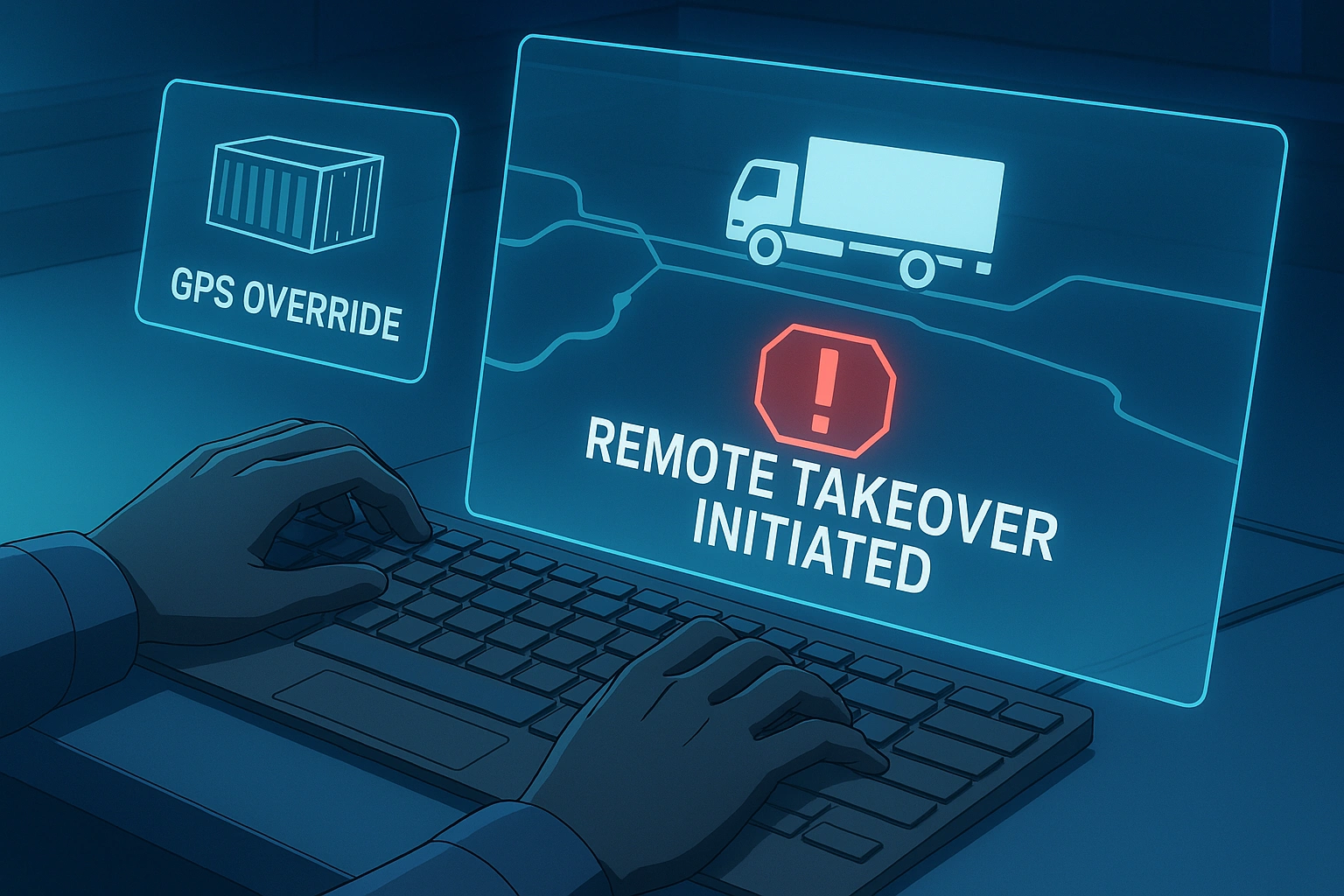
Cybercriminals and organized crime groups are converging to execute sophisticated cargo theft operations, leveraging legitimate remote monitoring tools to bypass traditional security measures.
The transportation and logistics industry faces an unprecedented threat as cybercriminals partner with physical theft rings to orchestrate complex, multi-stage attacks on the global supply chain. Our research reveals a disturbing trend: threat actors are abandoning traditional malware in favor of legitimate IT tools, making detection exponentially more difficult.
Between August and November 2025, PhishCloud security researchers identified nearly two dozen distinct campaigns targeting freight brokers and trucking carriers. These operations demonstrate a level of sophistication and industry knowledge that suggests insider involvement or extensive reconnaissance.
The Growing Threat Landscape
The Seven-Stage Attack Chain
🔍 Detailed Threat Analysis
The RMM Tool Arsenal
Remote Monitoring and Management (RMM) tools have become the weapon of choice for these sophisticated operations. Our analysis reveals the following distribution:
A legitimate remote support platform that provides full system access. Threat actors leverage its screen sharing, file transfer, and command execution capabilities to maintain persistence and exfiltrate sensitive data.
Enterprise-grade IT management software that offers comprehensive system monitoring. Attackers exploit its legitimate functions to blend in with normal IT operations while conducting reconnaissance.
ConnectWise's remote access solution provides unattended access capabilities. Cybercriminals use it to establish backdoors that persist even after initial detection attempts.
- Legitimate digital signatures bypass antivirus detection
- Common in enterprise environments, reducing suspicion
- Provide full remote access without custom malware development
- Lower detection rates compared to traditional Remote Access Trojans
- Built-in encryption and tunneling capabilities
Targeted Industries and Commodities
The selection of targets reveals strategic planning based on black market value and ease of resale:
- Food & Beverage: 180 incidents (68% increase from Q2 2024)
- Alcoholic beverages (high resale value, easy storage)
- Energy drinks (compact, high demand)
- Meat products (shortage-driven prices)
- Metals: 96% year-over-year surge to 53 incidents
- Copper at record highs due to EV demand
- Aluminum and steel for construction markets
- Electronics: Consumer goods and components
- Semiconductors and chips
- Gaming consoles and graphics cards
🎯 Technical Indicators of Compromise
Network Indicators
The following domains have been identified as command and control servers. Block these immediately at your network perimeter:
- carrier-packets[.]net
- rateconfirm[.]net
- centraldispach[.]net (typosquatting)
- brokercarriersetup[.]com
- fleetcarrier[.]net
Behavioral Indicators
- Unexpected RMM tool installations on dispatch workstations
- Multiple concurrent VPN sessions from single user accounts
- After-hours access to Transportation Management Systems
- Bulk exports of shipment manifests or customer databases
- Modifications to load assignments without dispatcher authorization
🛡️ Prevention and Mitigation Strategies
Stopping attacks in Stages 1-3 prevents all downstream damage. Focus defensive resources on initial access vectors and payload delivery mechanisms.
Immediate Action Items
- Deploy email gateway with URL rewriting and sandboxing
- Enable DMARC, SPF, and DKIM authentication
- Configure enhanced filtering for freight-related keywords
- Block executable attachments from external sources
- Implement banner warnings for external emails
- Mandate MFA for all load board accounts
- Require MFA for VPN and remote access
- Enable MFA on TMS platforms
- Deploy hardware security keys for privileged accounts
- Enforce unique passwords across all platforms
- Create whitelist of approved remote access tools
- Block installation of unauthorized RMM software
- Implement approval workflow for remote tool deployment
- Conduct quarterly inventory of installed software
- Monitor for portable executable launches
Industry Collaboration
The complexity of these attacks requires industry-wide cooperation:
- Information Sharing: Join freight-specific ISACs for threat intelligence
- Vendor Verification: Implement robust carrier vetting procedures
- Out-of-Band Communication: Verify high-value loads via phone
- Regulatory Compliance: Adopt NMFTA Cybersecurity Framework
Protect Your Supply Chain Today
Don't wait for an attack to expose vulnerabilities in your logistics operations. PhishCloud's comprehensive security platform provides real-time protection against sophisticated cyber-physical threats.